About this guideThis is independent, research-based analysis. We do not claim hands-on product testing unless a method and evidence are explicitly published.
“Field management” is at least five different jobs
Plan access and location-based coordination, daily reporting, labor and production capture, safety and quality forms, and workforce or equipment dispatch all happen in the field—but products organize around different anchors. FieldScout starts from browser- and QR-based workflows that connect safety, equipment readiness, deliveries, logistics, and MEP coordination. Fieldwire starts from drawings and tasks. Raken starts from the daily record. HeavyJob connects foreman entry to heavy-civil cost and production. Assignar connects people, equipment, competencies, and dispatch.
Name the anchor workflow before comparing screens. A focused tool can outperform a broad platform when every extra tap matters, but it can also create another reconciliation job in the office.
Current information must be obvious
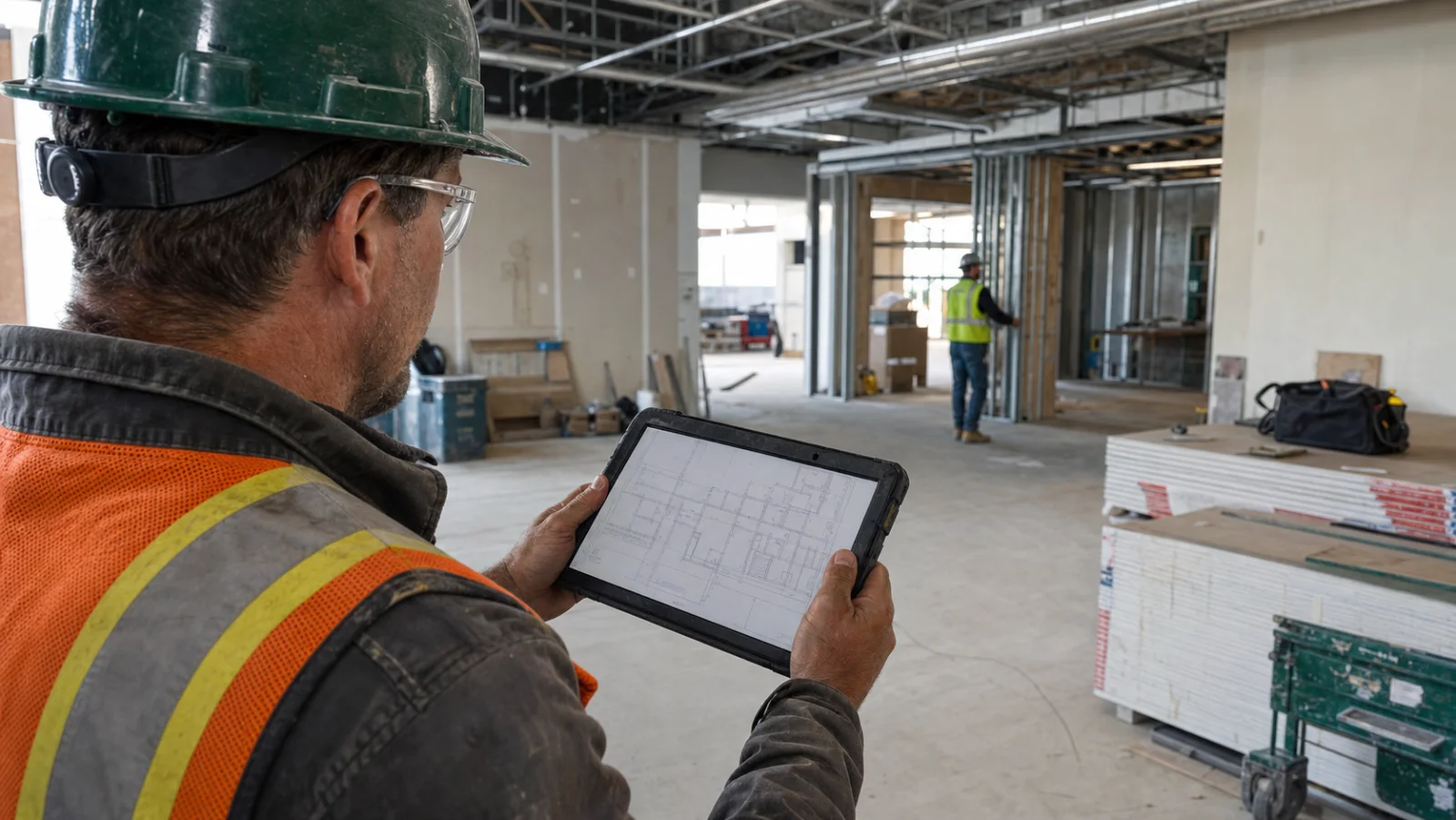
A drawing tool should make the current revision unmistakable, preserve prior markups appropriately, and expose changes without requiring field users to reconstruct document history. Search, sheet links, callouts, and loading speed matter under real jobsite conditions.
Test a large set on the actual devices and mobile-management policies used by the company. Put a user offline, issue a revision, reconnect, and observe conflicts. “Has offline mode” is not enough; establish which actions work, what syncs, and how the application communicates stale state.
The daily record should be a by-product of the day
A superintendent should not have to reconstruct eight hours of weather, labor, visitors, deliveries, delays, safety, photos, and significant events at 6 p.m. Good systems collect structured contributions during the day and produce a reviewable report without hiding authorship.
Define which parts can come from timekeeping, schedules, weather services, access systems, and subcontractors. Automation should reduce transcription, not insert unverified facts into a contractual record.
Measure behavior, not opinions
Run a two-week pilot with a live but controlled project team. Measure on-time report completion, task closure latency, late timecards, duplicate office entry, missing photos, sync failures, and support requests. Segment by role and project rather than averaging away the users who are struggling.
Interview field users after observing the workflow. A positive survey can coexist with incomplete records; a few complaints can coexist with materially better control. Use both evidence types.
- Median time to complete the daily report
- Percentage of required records complete by cutoff
- Number of office corrections or re-keyed entries
- Unresolved sync conflicts
- Field support requests per active user
- External-partner participation without staff intervention
Draw a hard line around integration ownership
Time, quantities, cost codes, employees, projects, companies, and equipment often exist in multiple systems. Document the direction of every integration, the identifier used to match records, the latency, error queue, and person responsible for reconciliation.
Do not assume a marketplace listing means every required object is synchronized. Ask for current technical documentation and demonstrate a corrected record, a renamed cost code, a terminated employee, and a failed transaction.
Frequently asked questions
What is the difference between field management and project management software?+
Field tools optimize high-frequency jobsite work such as plans, tasks, dailies, time, production, photos, and forms. Project platforms add broader document, commercial, correspondence, and portfolio controls. Many products overlap.
Which construction field app is best offline?+
Offline scope changes by product and workflow. Test the exact actions and devices you need—viewing plans, creating records, attaching photos, signatures, edits, and sync conflict handling—rather than accepting a general offline claim.
Research notes & sources
Product capabilities and status were checked on July 13, 2026. Sources support factual product statements; recommendations and frameworks are the Registry’s editorial analysis.